Hot Fog vs Cold Fog: How to Test Anti-fog Film
An anti-fog film has to stay clear in the conditions it will actually meet. Hot fog and cold fog tests check two very different situations, and a film that passes one can fail the other.
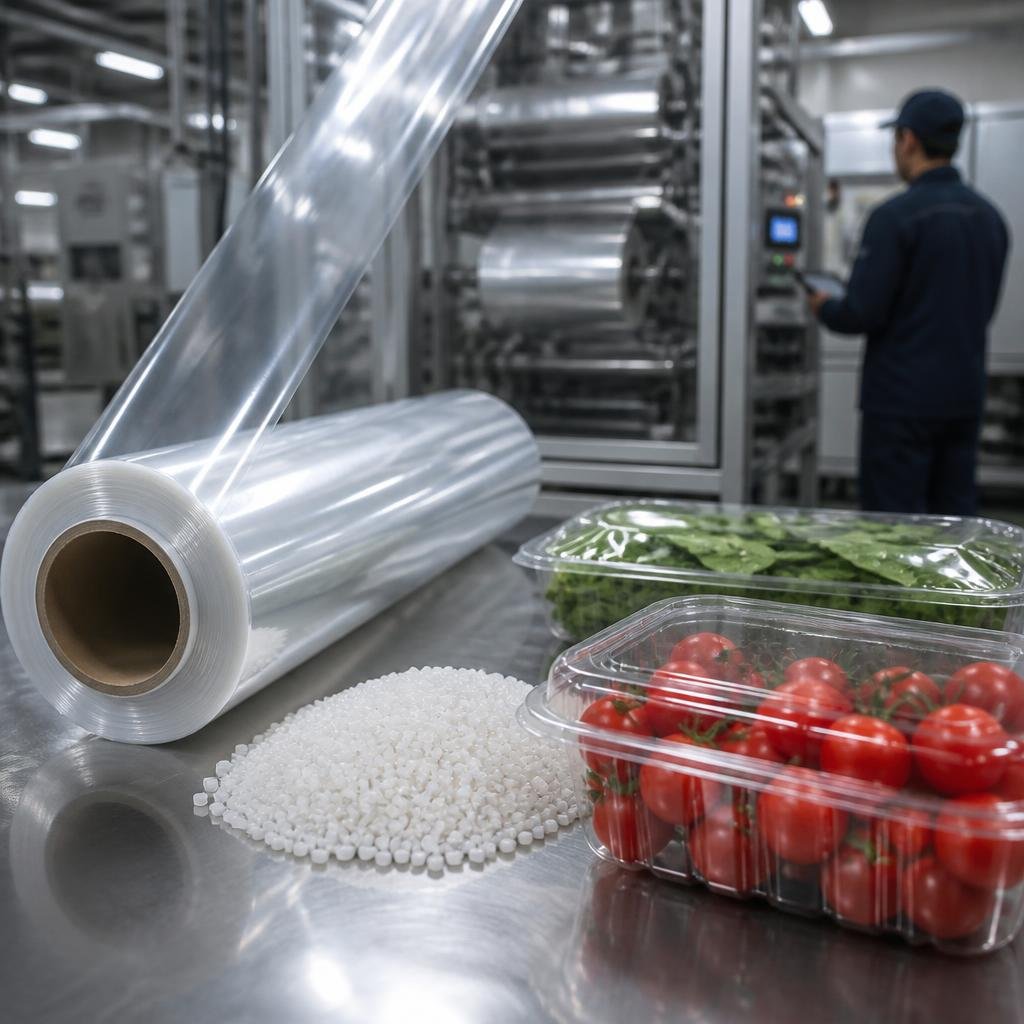
Fog forms when water vapour condenses on a film surface that is colder than the air around it. On untreated polyethylene the water gathers into small droplets that scatter light, so the film looks white and you cannot see through it. An anti-fog additive migrates to the surface and lowers its surface tension, so the condensation spreads into a thin, continuous and transparent layer instead.
The cold fog test reproduces chilled food packaging. A sample of film is fixed over a container of water, which is placed in a refrigerator at a typical chill-cabinet temperature. The film is checked at set intervals, from minutes to days, and rated on a visual scale that runs from dense white fog, through large droplets, to a clear, continuous water film. This is the test that matters for pre-packed salads, fresh produce, meat and ready meals.
The hot fog test reproduces greenhouse and tunnel film, and hot-filled packs. The water under the film is heated, so warm, humid air condenses on a cooler film, much as it does inside a greenhouse in the early morning. Because greenhouse film must stay clear for months or seasons, the hot fog test is often extended to measure durability: how long the film keeps working before the additive is washed off or used up.
The two tests stress the additive differently. Cold conditions slow migration, so the question is whether enough additive reaches the surface quickly enough. Hot, wet conditions wash additive off the surface, so the question is whether there is enough in reserve to keep replacing it. A grade tuned for chilled packaging may not last in a greenhouse, and a long-life greenhouse grade may act too slowly in a fridge.
Why anti-fog film fails, even with the right additive.
Anti-fog needs time to migrate after extrusion. Testing film straight off the line can give a false fail.
In co-extruded film the additive belongs in the layer facing the condensation, usually the inner layer.
Slip, antiblock and some UV stabilisers can compete with anti-fog at the surface, so test the full formulation.
Corona treatment and printing change the surface, so test the film as it will actually be used.
When you specify an anti-fog film, state which test applies, the temperature, how long the film must stay clear and the rating you need. For greenhouse film, add the planned service life, so the anti-fog and the UV protection last for the same period.
Aviura's AFG anti-fog masterbatch is used in agricultural and food packaging film and is tested in both hot fog and cold fog conditions. Send us your film structure, resin and end use, and we will recommend a dose and agree the test method with you before the trial.
Test anti-fog film in the conditions it will live in, not the ones that are easiest to set up.
Read the anti-fog film guide