Desiccant Masterbatch: How to Stop Moisture Defects in Recycled Film
Recycled polymer brings water with it. Inside the extruder that water turns to steam, and it leaves the die as bubbles, lacing and holes in the film. A desiccant masterbatch removes it while the polymer is processed.
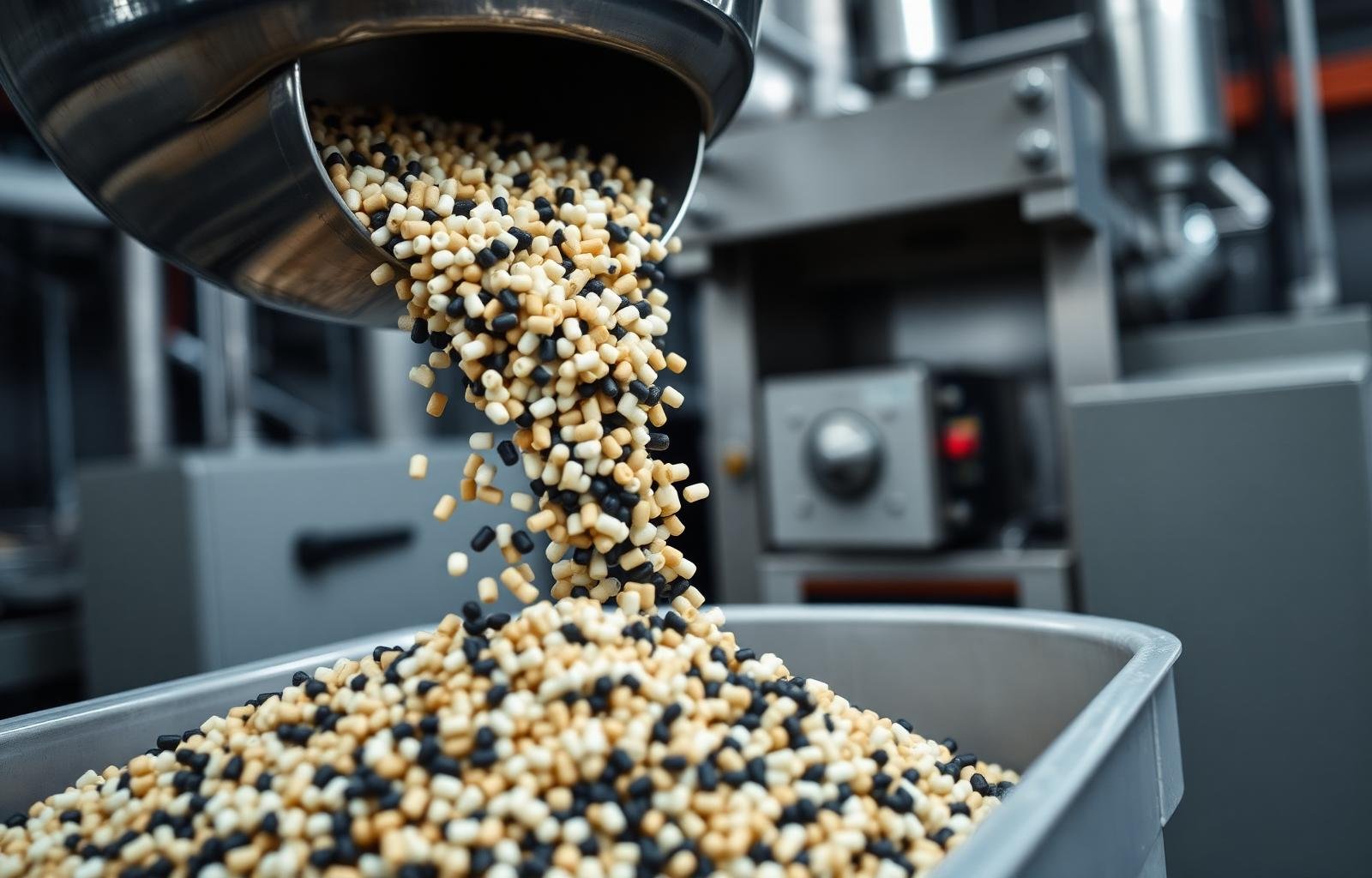
Polyethylene and polypropylene do not absorb much water, so virgin resin usually runs dry. Recycled material is different. Post-consumer and post-industrial scrap is washed, and washed flake and regrind carry moisture on the surface, in folds and trapped in contamination such as paper labels and residues. Pellets stored in humid conditions, common across Southeast Asia, pick up more.
At melt temperature that water turns to steam. In blown film it shows up as small bubbles and voids, as lacing (a net of holes, often near the film edges or in thin areas), and as weak spots that break the bubble. In injection moulding it appears as splay and silver streaks on the surface. The more recycled content in the blend, the bigger the problem.
A desiccant masterbatch carries a moisture-absorbing mineral, usually calcium oxide, dispersed in a polyolefin carrier. Calcium oxide reacts with water to form calcium hydroxide, binding the moisture chemically so it does not turn to steam. Because it works inside the extruder, it removes moisture as the polymer melts, with no separate drying step.
Hot-air or desiccant dryers are the other route. They work well, but they cost energy and floor space, need time to bring material down to a safe moisture level, and add a step that recyclers and converters running high volumes of PE would rather avoid. For many film lines, a desiccant masterbatch dosed through the existing feeder is the simpler fix.
How to use a desiccant masterbatch well.
Wetter material needs a higher let-down. Measure moisture in the incoming recyclate so the dose matches it.
Desiccants handle surface moisture. Very wet flake should be dewatered or dried before extrusion.
The mineral adds some opacity, so it suits pigmented and opaque film better than clear packaging.
A desiccant absorbs moisture from the air as well. Keep bags closed and use opened bags quickly.
Moisture is rarely the only issue in recycled polymer. Odour from residues and heat damage from earlier processing are common too, so a desiccant is often used together with an odour absorber and an antioxidant that protects the polymer through another melt cycle.
Aviura's DES desiccant masterbatch absorbs moisture in recycled PE and PP during processing, alongside ODR for odour and AOX for thermal protection. Tell us your recycled content, how the material is washed and stored, and the defects you see, and we will recommend a starting dose for a trial on your line.
If your recycled film is full of holes, check for water before you blame the polymer.
See Film & Packaging grades