
Methanol Production Pathways
Green Methanol vs e-Methanol: What’s the Difference?
As interest in sustainable methanol fuel grows, confusion around terminology is also increasing. The debate over green methanol versus e-methanol is becoming more prominent in energy and maritime discussions.
While both are low-carbon methanol alternatives, their production pathways differ significantly.
What Is Green Methanol?
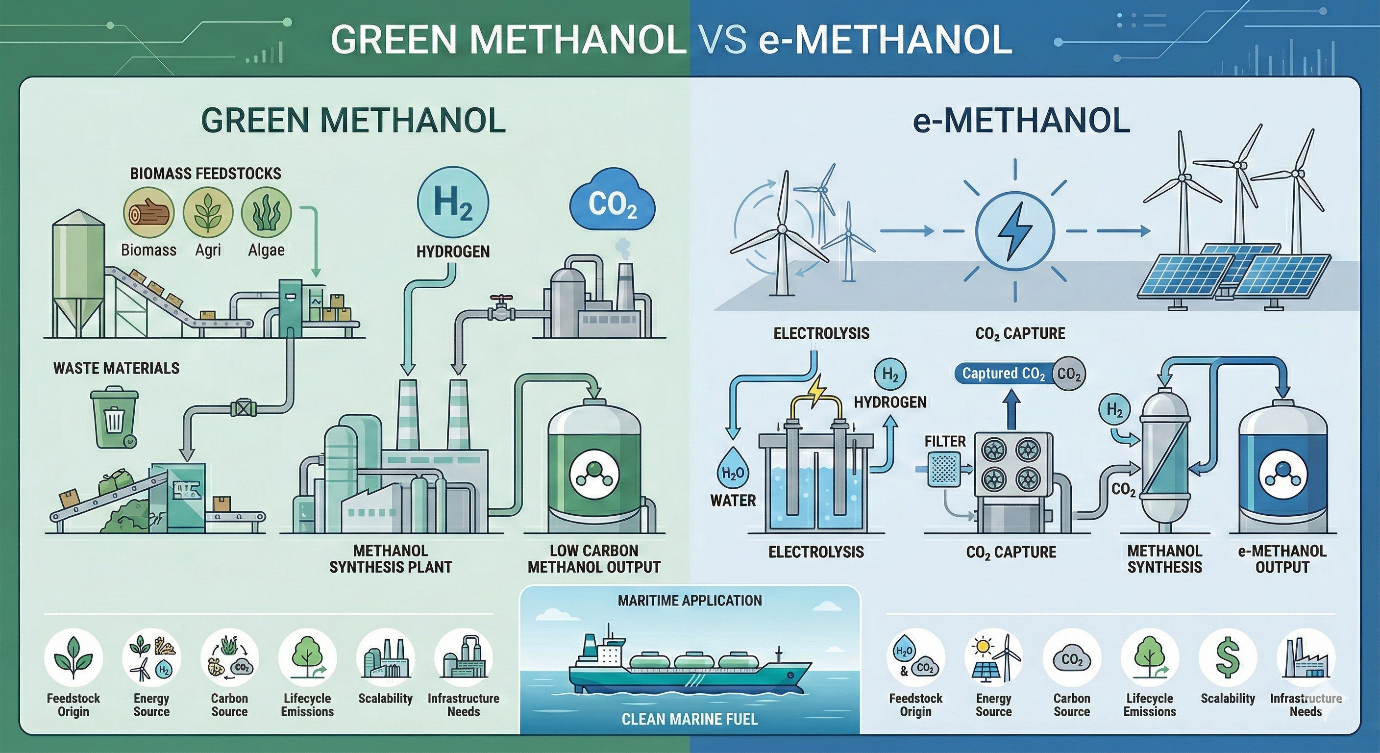
Green methanol is broadly defined as methanol produced using renewable or low-carbon inputs. This can include:
- Biomass-based methanol
- Methanol produced from renewable hydrogen and captured carbon
- Waste-derived feedstocks
The key characteristic is lower lifecycle carbon intensity compared to conventional fossil-based methanol.
However, “green methanol” is frequently used as an umbrella term encompassing various renewable methanol production pathways.
What Is e-Methanol?
E-methanol (electro-methanol) specifically refers to methanol produced using:
- Green hydrogen generated from electrolysis
- Captured carbon dioxide (CO₂)
- Renewable electricity
The “e” represents the importance of renewable electricity in production.
E-methanol production typically involves:
- Electrolysis to produce hydrogen
- CO₂ capture
- Methanol synthesis
This pathway aims to produce a nearly carbon-neutral fuel when powered solely by renewable energy.
Key Differences Between Green Methanol and e-Methanol
While all e-methanol can be considered green methanol, not all green methanol is e-methanol.
The differences lie in:
- Feedstock origin
- Energy source
- Carbon source
- Lifecycle emissions profile
Green methanol might utilise bio-based carbon, while e-methanol depends on captured CO₂ and renewable electricity.
Cost and Scalability Factors
E-methanol production is highly dependent on:
- Renewable electricity availability
- Electrolyser costs
- Carbon capture integration
Green methanol pathways utilising biomass or waste feedstocks may encounter constraints linked to feedstock availability and logistics.
For large-scale sustainable methanol fuel deployment, scalability depends on:
-
- Reliable hydrogen supply
- Carbon sourcing infrastructure
- Industrial synthesis capacity
- Long-term offtake agreements
Role in Maritime Decarbonisation
Both green methanol and e-methanol are being evaluated as clean marine fuel options due to:
- Compatibility with existing engine designs
- Lower sulphur emissions
- Reduced lifecycle carbon intensity
Shipping companies are increasingly assessing methanol as a fuel alternative as part of decarbonisation strategies.
Strategic Outlook
The debate between green methanol and e-methanol goes beyond semantics, touching on larger issues like feedstock sustainability, infrastructure development, and long-term price competitiveness.
As worldwide demand for low-carbon methanol increases, clear terminology and thorough lifecycle assessments will grow more crucial.
Ultimately, achieving commercial success will rely on well-organised supply chains, clear carbon accounting, and disciplined project development, not merely labels.