
Insights
The Future of Sustainable Aviation Fuel (SAF): Decarbonising Global Aviation
The aviation industry faces one of the most complex decarbonisation challenges in the global energy transition. Aircraft require fuels with extremely high energy density, making direct electrification impractical for most long-haul flights.
As governments and industry leaders pursue net-zero emissions, Sustainable Aviation Fuel (SAF) has emerged as one of the most promising pathways for reducing aviation’s carbon footprint.
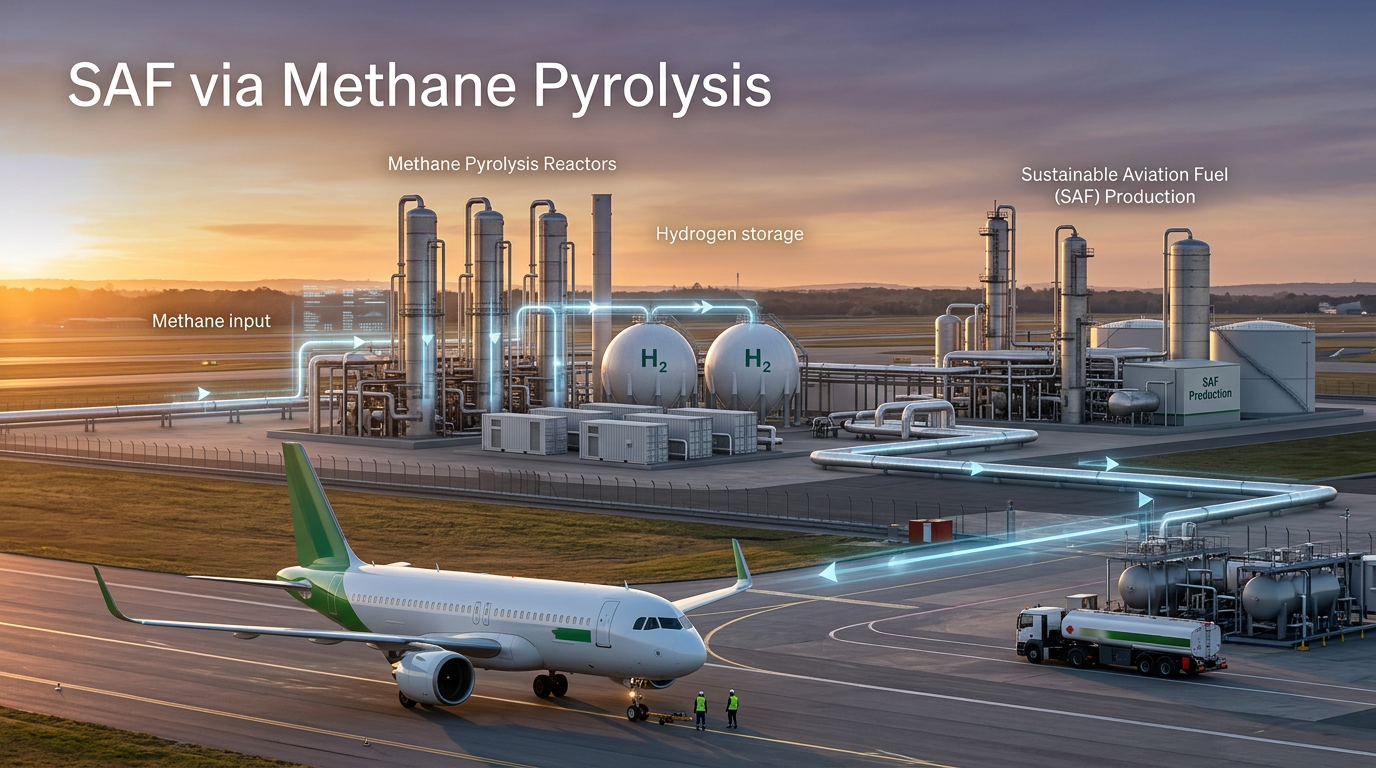
Aviation plays a vital role in the global economy, supporting trade, tourism, and international links. However, it is also one of the most difficult sectors to decarbonise due to its reliance on high-energy liquid fuels.
As countries accelerate their shift towards net-zero emissions, Sustainable Aviation Fuel (SAF) has become one of the most promising options to reduce aviation’s carbon footprint while ensuring the reliability and performance required for modern aircraft.
SAF allows the aviation sector to cut lifecycle emissions without significant changes to aircraft engines or fuel infrastructure. As a result, it is widely seen as a vital technology for decarbonising aviation in the coming decades.
What is Sustainable Aviation Fuel?
Sustainable Aviation Fuel is aviation fuel made from renewable or low-carbon feedstocks, which greatly decrease the overall greenhouse gas emissions across its lifecycle compared to traditional jet fuel.
Unlike conventional fossil-based aviation fuel, SAF can be generated from various alternative sources, including:Agricultural residuesWaste oils and fatsMunicipal solid wasteRenewable hydrogen paired with captured carbon dioxideBiomass-based feedstocks
Not all solid carbon byproducts are immediately market-ready.
Commercial viability depends on:
- Carbon purity levels
- Particle size distribution
- Surface structure
- Post-processing requirements
These fuels are intended to be chemically similar to conventional jet fuel, enabling them to be blended with existing aviation fuels and used in current aircraft engines.Due to this compatibility, SAF can integrate into existing fuel supply chains, making
Why Aviation Needs Sustainable Aviation Fuel
Decarbonising aviation poses unique challenges compared to other sectors of the energy system.Aircraft require fuels with very high energy density to enable long-distance flights, and current battery technologies have not yet met these demands for most commercial aviation.
While electric aircraft and hydrogen-powered aviation are being explored for short-haul routes, these technologies remain in early stages of development and face substantial infrastructure and engineering challenges
Sustainable aviation fuel offers a short-term solution that reduces emissions while ensuring compatibility with current aircraft fleets and airport infrastructure.
As worldwide demand for air travel continues to increase, SAF is expected to be a key part of the aviation industry’s plan to meet long-term climate objectives.
Key Production Routes for SAF
Several technological pathways are currently employed to produce sustainable aviation fuel. Each pathway depends on different feedstocks and processing technologies but aims to create fuel that meets aviation safety and performance standards.
Bio-Based SAF
Bio-based SAF is produced using organic feedstocks such as plant oils, waste fats, agricultural residues, and forestry by-products.These feedstocks are transformed into aviation fuel via advanced refining techniques that eliminate impurities and convert them into energy-rich liquid hydrocarbons.Bio-based fuels are the most established and commercially used SAF pathway today.
Synthetic Aviation Fuels (Power-to-Liquid)
Synthetic aviation fuels are produced by combining renewable hydrogen with captured carbon dioxide to create hydrocarbon fuels suitable for aviation.
This process commonly known as Power-to-Liquid (PtL) utilises renewable electricity to generate hydrogen via electrolysis, which is then synthesised into liquid fuels.Synthetic fuels offer significant long-term potential because they are not constrained by the availability of biological feedstocks.
Waste-Based Sustainable Aviation Fuel
Waste-derived fuels utilise municipal solid waste, industrial residues, and other carbon-rich waste streams as feedstocks.
These materials are transformed into synthesis gas and subsequently converted into aviation fuel via catalytic processes.
Waste-to-fuel technologies offer the advantage of diverting waste from landfills while producing low-carbon energy carriers.
Market Drivers for SAF Adoption
Multiple factors are driving the rapid global adoption of sustainable aviation fuel.
Climate Commitments Airlines, governments, and aviation organisations are progressively committing to net-zero emissions goals, which demand significant cuts in aviation fuel emissions. SAF is expected to make a significant contribution towards achieving these targets.
Regulatory Policies
Many countries are implementing policy measures to promote SAF deployment, including:
- Mandates for blending sustainable aviation fuel
- Carbon pricing frameworks
- Clean fuel standards.
- Incentives for the production of low-carbon fuels
These policies aim to encourage investment in SAF production plants and infrastructure.
Corporate Demand
Businesses are progressively looking for lower-carbon travel alternatives to support their sustainability initiatives.
This increasing demand is motivating airlines and fuel suppliers to invest in SAF supply chains.
Challenges in Scaling Sustainable Aviation Fuel
Although SAF has significant potential, various challenges need to be overcome to expand its production and satisfy worldwide aviation needs.
Production Capacity
Global SAF production continues to be limited compared to overall jet fuel use.
Expanding production capacity will demand substantial investment in new fuel production facilities and supply chains.
Cost Competitiveness
Sustainable aviation fuels are currently more expensive than conventional jet fuel due to limited production scale and emerging technology pathways.
However, costs are anticipated to decrease as production increases and technologies develop.
Feedstock Availability
Certain SAF pathways rely on biological feedstocks that could encounter supply limitations if demand grows substantially.
Advanced synthetic fuel pathways could help tackle this challenge by utilising renewable electricity and captured carbon dioxide.
The Role of Innovation in the Future of Aviation Fuels
Advances in hydrogen production, carbon capture technologies, and renewable energy infrastructure are expected to play a significant role in the future development of sustainable aviation fuels.
As these technologies develop, SAF production could become more scalable, cost-effective, and accessible.
The ongoing development of low-carbon fuel technologies will be crucial for helping aviation move towards a more sustainable future.
Sustainable aviation fuel is one of the most promising solutions for cutting emissions in one of the world’s hardest-to-decarbonise sectors.
By enabling substantial emissions reductions while maintaining compatibility with existing aircraft and fuel systems, SAF offers a practical pathway towards cleaner aviation.
As investment, technological innovation, and supportive policy frameworks continue to grow, sustainable aviation fuel is expected to become a vital part of the global aviation energy landscape.