Filler Masterbatch: When Calcium Carbonate and Talc Save Money
Filler masterbatch replaces part of the polymer with a cheaper mineral. Used well, it lowers cost and can even improve the product. Used badly, it causes weak film, die build-up and rejected parts.
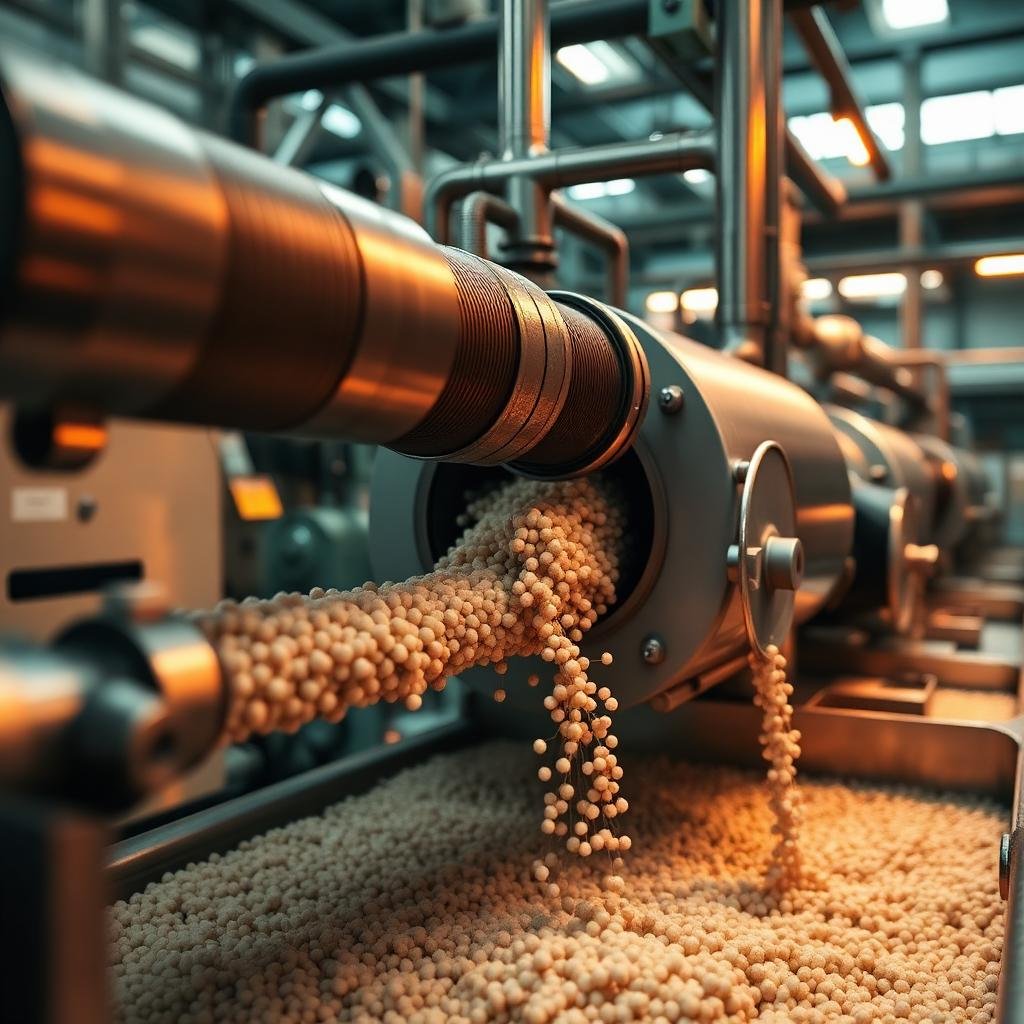
A filler masterbatch is a high concentration of mineral, most often calcium carbonate or talc, dispersed in a polymer carrier. Because the mineral costs less per kilogram than polyethylene or polypropylene, replacing part of the resin lowers the material cost of the product. That is why filler masterbatch is widely used in carrier bags, refuse sacks, non-woven fabric, raffia, thermoformed trays and injection-moulded parts across Southeast Asia and beyond.
Calcium carbonate is the most common filler for PE film and many PP products. Ground or precipitated to a fine particle size and surface-coated, usually with stearic acid, it disperses well and has little effect on processing at moderate loadings. In film it adds opacity, gives a more paper-like feel, improves printability and can increase output on some lines, because the mineral conducts heat better than the polymer and helps the bubble cool.
Talc is a plate-shaped mineral, and that shape makes it a stiffening agent as well as a filler. In polypropylene it raises flexural modulus, heat resistance and dimensional stability, and it acts as a nucleating agent, which can shorten cycle times. That makes talc-filled PP a standard choice for appliance parts, automotive interior components and technical mouldings where stiffness matters more than cost alone.
Fillers are not free performance. Every per cent of mineral replaces polymer that was carrying the load, so tensile strength, tear resistance, impact strength and elongation fall as loading rises, and dart impact in thin film can fall quickly. Poor dispersion leaves agglomerates that cause holes in film and weak points in parts. Mineral can build up on the die lip at high loadings, and fillers carry some moisture, so they need to be kept dry.
How to get the saving without the problems.
Trial in steps and test strength at each loading, rather than starting at the maximum.
Mineral is denser than polymer, so filled products weigh more per square metre or per part.
Compare cost per part or per square metre, not just cost per kilogram.
Store filler masterbatch sealed, and add a desiccant if you see moisture bubbles.
The density point is often missed. Because calcium carbonate is far denser than polyethylene, a filled film or part of the same size weighs more. If you sell by the piece or by area rather than by weight, part of the saving per kilogram is lost to the extra weight, so the true saving should always be calculated per finished unit.
Aviura makes CAC calcium carbonate filler masterbatch for PE, LLDPE and PP film and moulding, and TLC talc masterbatch for stiffer PP parts, both tested for dispersion, melt flow and mechanical properties. Tell us your product, process and the properties you must keep, and we will suggest a starting loading for a trial.
Measure the saving per finished part, not per kilogram of resin replaced.
See industrial function grades